· By Angela Seto
We finally opened the hives
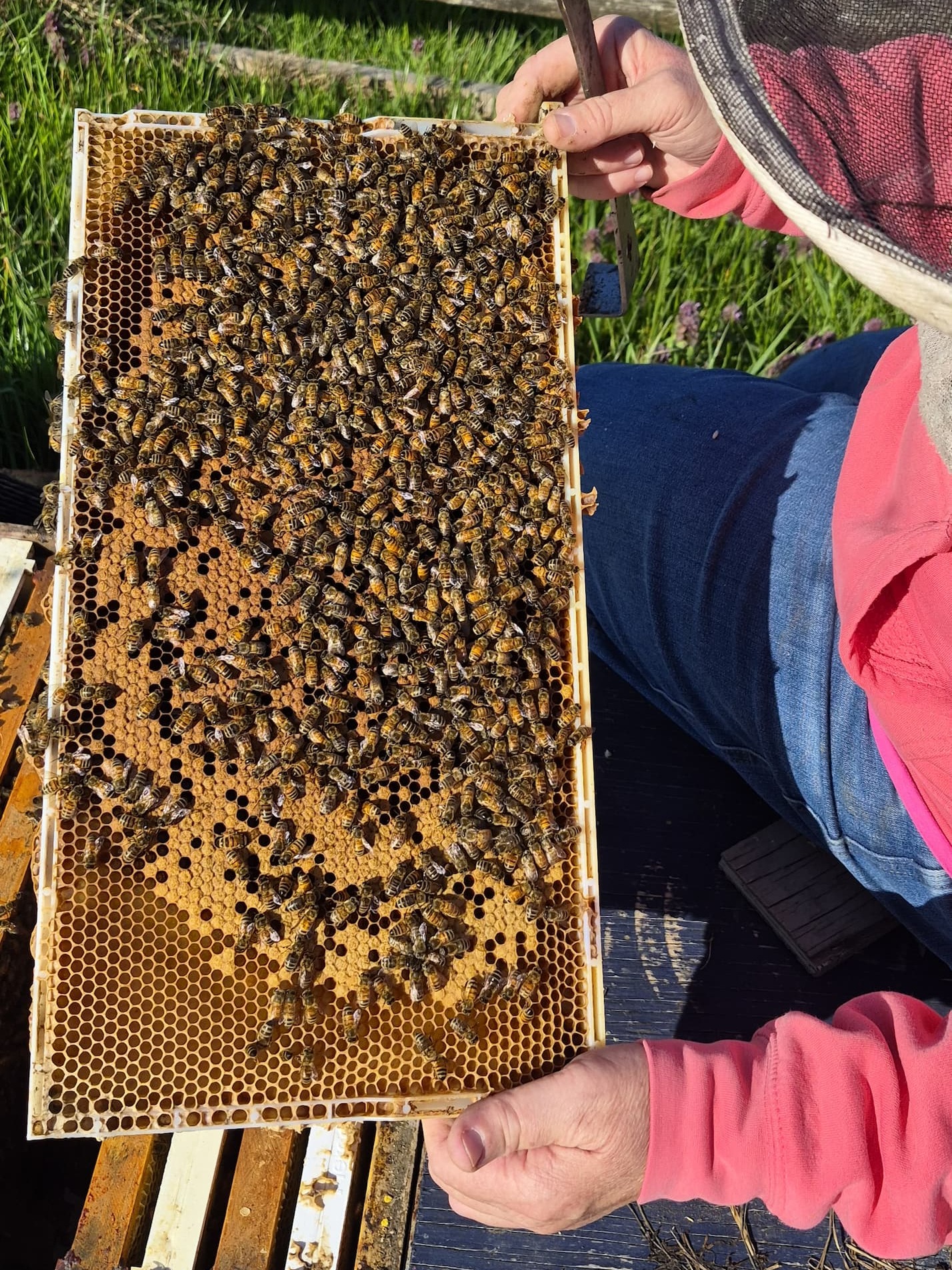
A first peek into our hives this spring.
What's new on the farm:
It's the first week of April now and some of you might be wondering what's going on with the bees already??
Trust me, we felt the same.
Andrew actually departed for the island over two weeks ago, and arrived two days ago.
I know, I know. That math doesn't check out.
The trip is supposed to take two days. One day from Saskatoon to Canmore. The second day from Canmore to Vancouver Island.
Unfortunately, at this time of year, that second leg can be quite unpredictable. It involves a couple of high-elevation mountain passes and quickly changing weather patterns.
Andrew made it through the first day with no issues.
After that, he got an unlucky combination of bad weather, huge snowfall, and avalanches that closed the highways.
A few days later, when he judged it was safe enough to continue the drive, his truck wouldn't start!
So it was a scramble to get the truck into a shop, find out that the part would take weeks to arrive, and find a way to get to the island.
Finally, this past Wednesday, he made it.
Since his arrival, he's been picking up shipments of supplies and going through his equipment.
And, of course, he's started to unwrap the bees.
Now, he's only had time to look at a small sample of the hives, but things look very promising so far.
When the team is looking at hives, they are checking for a few things:
- Queen laying: Is the queen laying eggs? How much has she been laying? Is she laying in an organized manner?
- Food stores: have they gone through their winter stores? Do they have enough food?
- Population size: Is the population of bees large enough to take care of the developing baby bees, the queen, and to forage for food?
We rank our hives as strong or weak based on these factors. The weak hives are at risk of dying without intervention.
For those hives, we combine them. The combined populations are bigger, so they can work together.
It's still much too early to say how we did this winter, but the first sets of hives we've looked at have given us a lot of optimism.
In our photo above, we are showing a frame of brood that was inside one of our fall splits. A split is a new hive that we created by taking bees that came from other, larger hives.
We make splits throughout the season, but fall is the latest time. A fall split hive would be one of our smallest hives going into the winter.
This last fall we were also trying a new method to make our splits and see if it would be successful.
When we pulled out a frame of brood like that, we were so impressed! The queen has been very productive. Not only did the fall splits survive, but they were thriving.
The closed tan and brown circles are cells with developing brood underneath. We call this "capped brood" because the bees put a wax "cap" over the brood to protect it while it cocoons and turns into an adult bee.
What's even better is the density of the capped brood. This frame is not yet completely full, but this amount of capped brood on both sides will equal around 4000–4500 new bees that will emerge!
Many of our hives have several frames like this, so you can see how the populations will quickly grow as spring continues and the warm weather helps the bees and Queen produce more baby bees.
In the next week, we'll be able to get through all of the hives and report back on how they are doing!
Honey Lime Fruit Salad
Easter weekend always makes me realize "oh! Spring is actually coming!"
While the meals aren't typically as heavy as what you have on the menu around Thanksgiving or Christmas, it's always nice to have a side that is light and fresh.
Fruit salad is an easy, light, sweet choice for those who are looking for something other than chocolate or carrot cake.
I've never had fruit salad with a creamy dressing, but after reading about it, I think this honey-lime dressing is a much better option to help the fruit shine!
Check out the recipe from Cooking Classy.