
· By Angela Seto
How is honey made, anyway?
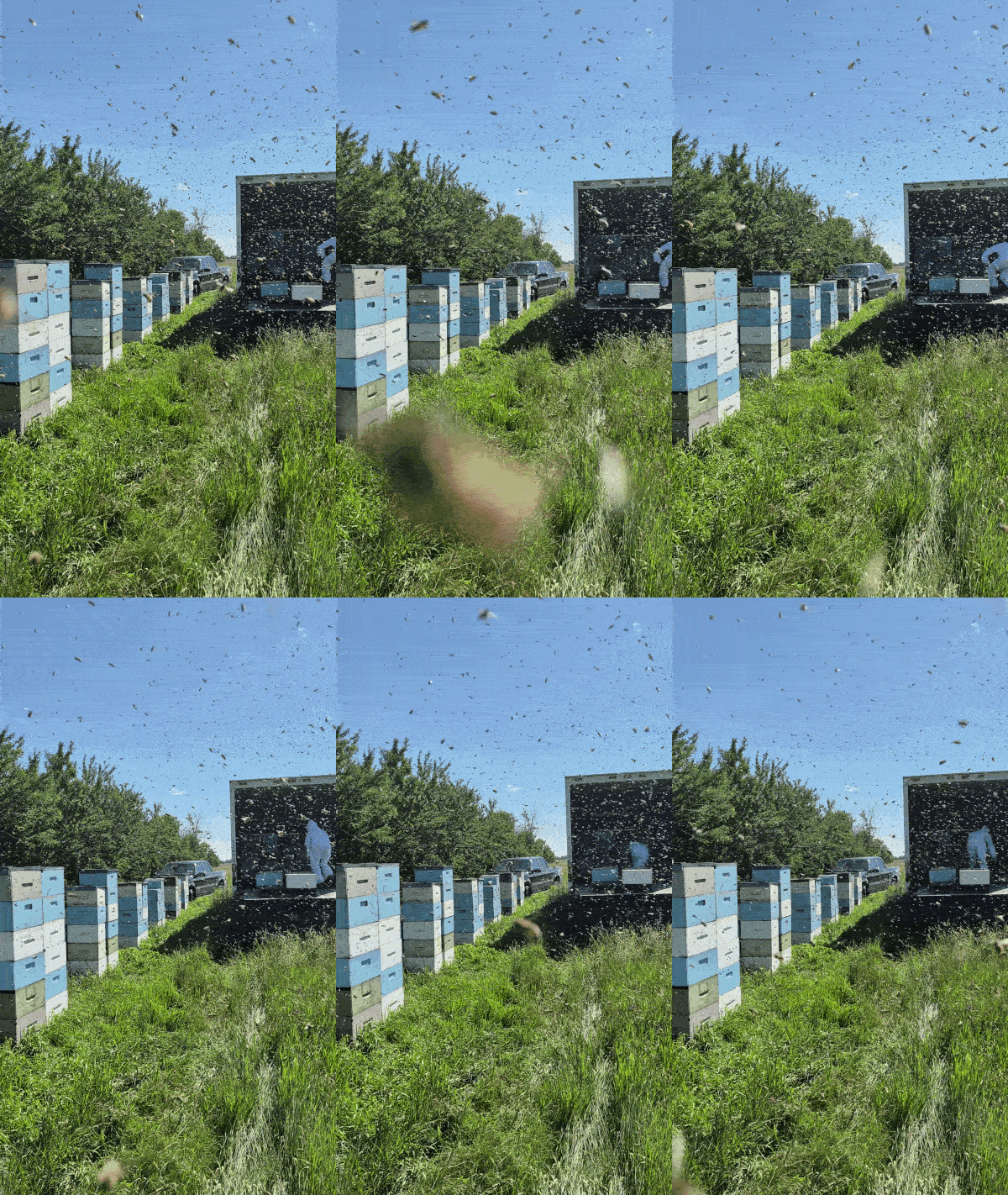
The hives are getting stacked up with honey boxes, and the bees are flying like crazy.
What's new on the farm:
The crops are blooming, and the hives are getting taller as the bees take advantage of the nectar flow.
As the honey boxes fill up, we go around all the hives, adding more boxes so the honeybees have somewhere to put the nectar.
We don't take the full boxes off right away because the bees need time to "process" the nectar into honey.
What do I mean? Well, without the bees' processing, we'd all be drinking sugary water!
First the honeybees go off and collect nectar from the flowers that are blooming nearby.
They drink up the nectar and store it in their "honey stomach" (also known as a "crop"), which is actually a separate organ from their actual stomach. We get a lot of comments online about honey being bee puke, but it actually isn't, because the bees don't digest food in the crop!
The crop can hold up to one-third of the bee's weight, so they are strong little gals carrying the nectar back to their hive.
While the forager bees fly back to the hive, there are enzymes in their honey stomach that break down the nectar. The enzymes convert the complex sugars (sucrose) into simple sugars (fructose and glucose). This is the first step in its transformation into honey.
Once she gets back to the hive, she passes the nectar to the worker bees inside. The bees pass the nectar from mouth to mouth, adding more enzymes along the way. Sometimes the nectar gets passed 10-20 times!
Along the way, the bees will deposit the nectar into the honeycomb cells. Nectar has up to 80% water, which is too wet to store long-term because it would ferment. Honey, we know, lasts pretty much forever, and part of this is because it has less than 18% water.
To get from 80% to under 18%, the bees will fan their wings over the open cells to create airflow and evaporate the water from the nectar. This is how the nectar starts to get thicker and more like the honey we know.
The bees will perform this over and over again; drink up the nectar, pass it around, and store and evaporate it. They constantly check the moisture level. They will repeat this process until the nectar has transformed into thick, enzyme-rich honey. We call this "ripening" the honey.
Once the honey is fully processed, they will cover the honeycomb cell with a beeswax cap (we call this "capping" the honey). This makes a little beeswax "pot" that keeps the honey safely stored until they are ready to eat it.
This is where we come along. Once we see that the honey is being capped, we know that the bees have processed it and it's ready for harvest.
We always wait until the bees have capped most of the cells with wax before we harvest. In one of our first years, we harvested too early, and we had batches of honey that fermented! It was a hard lesson that we've learned never to repeat again.
Unfortunately, not every large producer waits. Some harvest early on purpose for speed and higher volume. It’s one of the reasons we’re so particular about doing things the slow, traditional way. We want every jar to taste like real, properly ripened prairie honey.
Ginger Honey Lemonade
We recently visited Andrew's parents, and his dad made a big batch of this ginger lemonade that we were drinking all weekend.
This recipe is a bit more functional than regular lemonade because it combines ginger and green tea, which are shown to help with digestion and immune support. But it tastes so good you would drink it even if you weren't looking for those benefits!
This recipe makes a concentrate; Andrew's dad made a 1.5L pitcher that we diluted with water when we poured ourselves a glass. He's also not fussy about exact measurements, so you can take this as a starting point and adjust it to your personal tastes.
Ingredients:
- 3 knobs of ginger (about 2 inches each), peeled
- juice from 2 lemons
- 2 bags of green tea (optional)
- 5 heaping tablespoons honey
- 1.5 L water
- large bunch of fresh mint (optional)
Directions:
- Grate the ginger or press with a garlic press to make it pulpy and release the juices. Add it to a 2L pitcher
- Add lemon juice, and green tea bags, and fresh mint.
- Boil 1.5 L of water.
- Once it comes to a boil, pour into the pitcher and steep all the fresh ingredients.
- Let the mixture cool, then add your honey. Stir vigorously to dissolve honey completely.
- Serve over ice. You can drink it as is, but I like to dilute it 50:50 with water as it's quite sweet and the ginger is strong!