
· By Angela Seto
Should you add honey to hot tea?
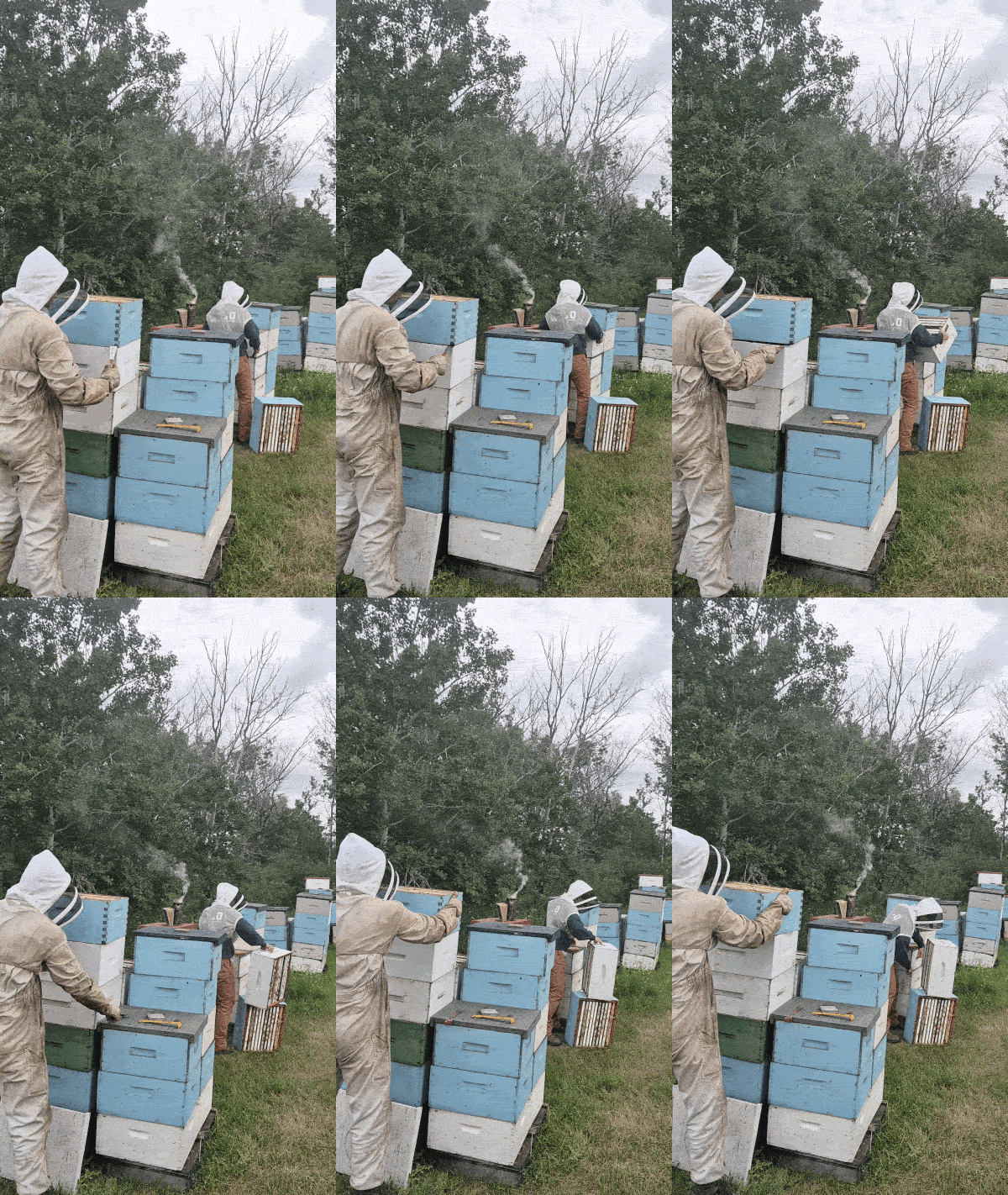
Pulling honey boxes off the hives.
What's new on the farm:
We are now mid-August and it was another cold week in Saskatoon. With the weather staying the same and harvest still going on, we don't have too much news this week. So instead, I'll be answering some questions from you, our readers!
From Gloria P.: When you talk about splitting the hives and doing it at the best time, you mentioned that the hive may get ready to swarm. Do the bees swarm because the queen has left the hive and they follow her to protect her? Does she leave due to lack of space in the hive?
As the hive population increases over the season, the bees will start to run out of room. When they feel like they don't have any more space, they will split up into a second colony, which flies off to find another home. So, one colony turns into two. When the second colony flies off, this is called swarming.
This is the natural reproductive process of honeybees before beekeepers began interfering. We don't want to lose half of our bees to the wild, so we either split them or add more space to the hive to let them continue growing without swarming.
While most people think that the queen is who runs the show, it's actually the worker bees. They are the ones who can tell that they are running out of space.
Once that happens, they start to form "queen cups" which are special cells for new queens to grow in. The queen will lay eggs into those cups, and then the workers will raise new queens.
When the new queen has emerged, or sometimes just before, the older queen will start to wind down and stop laying eggs. When it's time to go, half of the population takes off with the older queen to find a new home. The new queen takes over the remaining hive with the rest of the bees!
From Stephen C.: What do you do with the wax?
When the honey is ready in the hive, the bees cover the honey with a layer of beeswax to preserve it. To get the honey out of the honey frames, we have to scrape that wax off before putting the frames into our honey extractor machine.
When the honey spins out, some wax comes out along with the honey. As the honey is pumped from the machine to our tank, we separate out a significant amount of wax. Then the honey sits in our tank to settle overnight. Wax is lighter than honey, so the two separate in the tank.
We scoop the wax out and store it in barrels. Surprisingly, you get very little wax compared to honey over the season. For every 200 lbs of honey we extract, we may get about 1 lb of wax. It takes a lot of energy for the bees to make beeswax, and it is a very precious product!
Right now, we have been collecting wax and storing it. Since we are a pretty small team, we haven't had much time to process it. Long ago, Andrew's grandpa would clean the wax and sell it at the farmers' market, and also make candles.
A few years ago, I used to make candles to sell at Christmas markets. It's very meditative and relaxing to melt and pour small batches of candles. Maybe in the future we will begin producing candles again to sell. What do you think? Should we?
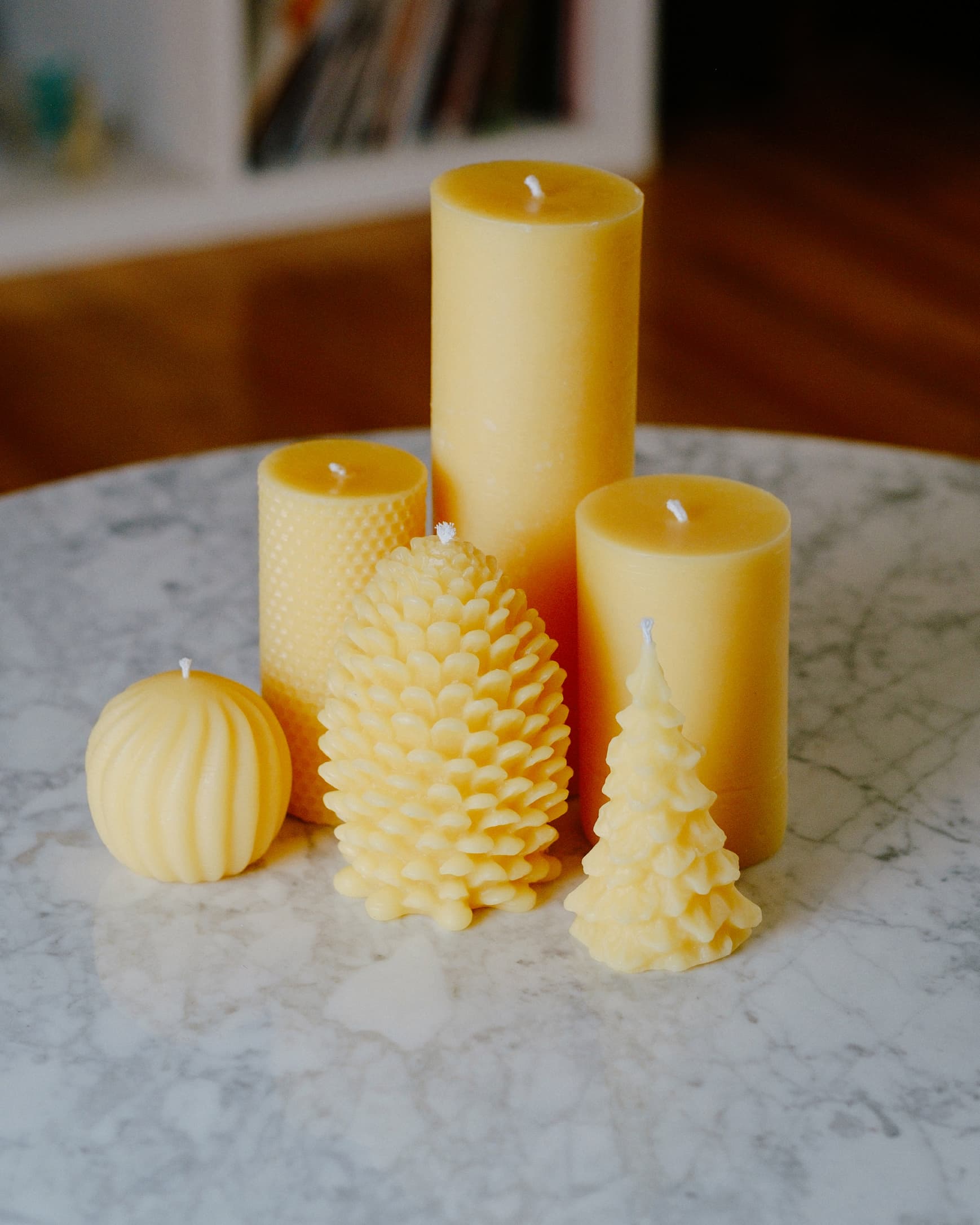
A collection of our homemade beeswax candles.
From Terry H.: When using your honey in cooking or making tea, should one wait till it cools down, as not to lose the honey benefit to excessive heat?
This is a great question, and the answer depends on what you are using the honey for!
Honey is very sensitive to heat. The enzymes and antioxidants start to deteriorate as you heat it up. The inside of a beehive can get up to 40°C/104°F, so that is a safe temperature. Above 60°C/140°F, the enzymes are completely destroyed.
If you are consuming honey for health reasons, you can add it to recipes where you don't need to heat it (salad dressings, slathered on toast, cold drinks, or right off the spoon!).
Or if you want the benefits in your tea or coffee, I would wait for the drink to cool off and add it right before you drink it. Our creamed honey will take a bit more stirring than other honeys to fully dissolve, but it's worth it!
When I cook or bake with honey, I accept that the health benefits are gone, but there are other sensory benefits to using honey. Honey is sweeter than white sugar, so you can use less of it in your cooking and baking. Honey also adds moisture to your recipes, and browns better in the oven. And don't forget the flavour is unmatched!
Thanks to everyone who writes to us to share stories and answer questions. We try to respond to every email in our inbox. And once in a while, I'll take some questions to answer, like in this edition of our newsletter!