
· By Angela Seto
It's time to go, boys
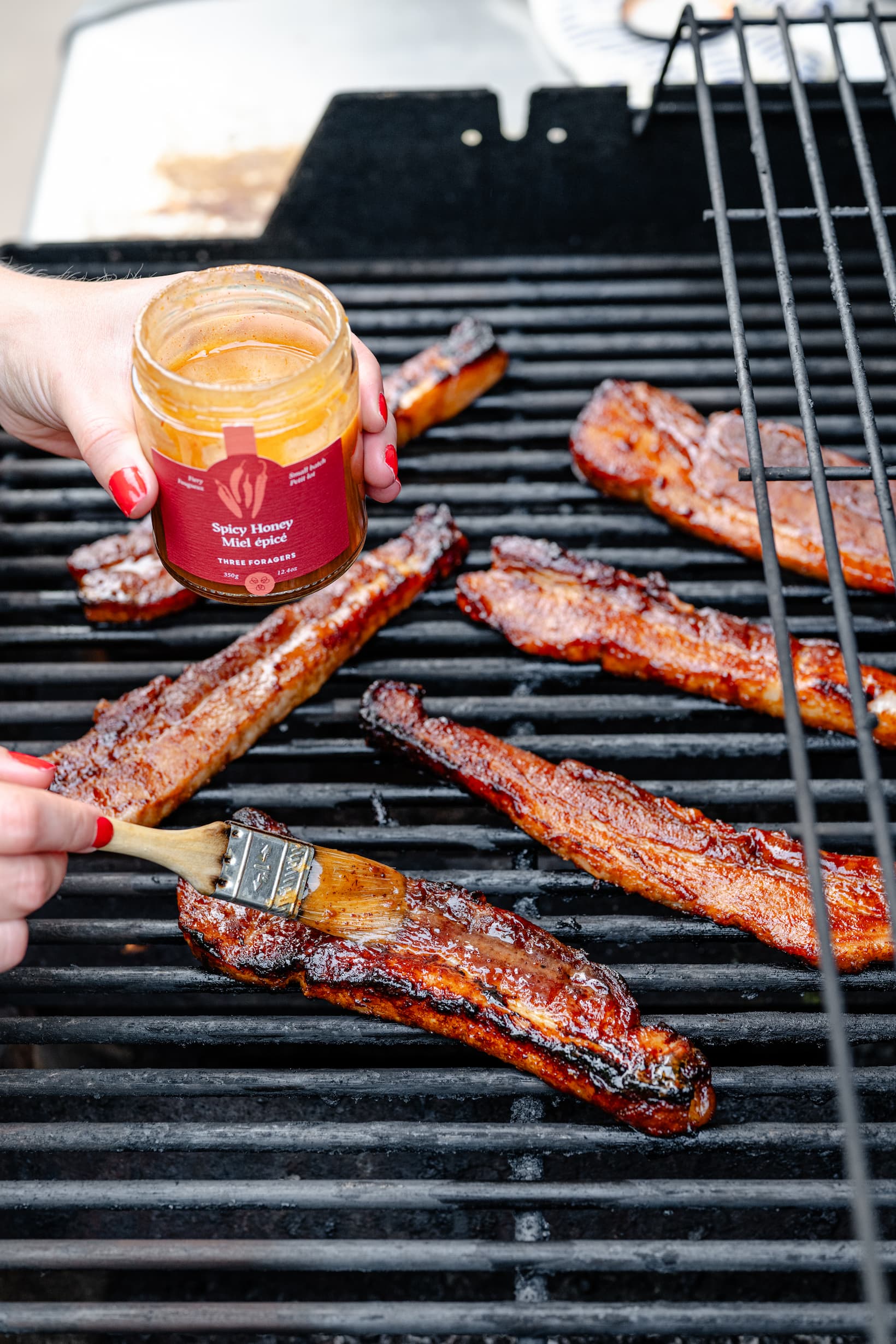
Barbecued pork belly glazed with our Spicy Honey
What's new on the farm:
Fall is coming in full force here in Saskatoon. The crew is taking off any honey boxes left over, so only the brood box remains for each hive. They're also treating for mites to keep the population healthy going into winter and checking that the hives have enough food to last them until spring.
The honeybees also sense the change in season and are working hard to prepare the colony. The flowers are almost done, and the weather is getting colder. They are no longer thinking about growing and making honey. Instead, it's time to batten down the hatches for winter.
The queen starts to slow down her egg-laying and will eventually take a break. That way, there are fewer mouths to feed over winter.
The summer bees who bring in all the honey will start to die off, since they only live for a few weeks to get all the hard work of harvesting done. The winter bees are emerging now, and these will live through the winter months to keep the colony alive until spring.
For most other insect colonies, like wasps and bumblebees, all the workers die before winter. They leave the queen behind to survive and start the next generation in the spring. But honeybees survive year-round. This is why they make so much honey!
What do I mean by that? Well, wasps and bumblebees also make a sweet nectar substance like honey for their own nests. But since they don't have to worry about feeding the colony throughout the winter, they don't have to collect as much to keep for winter stores.
Honeybees need to make sure they have enough food for the winter to feed the winter bees, so they work like crazy over the summer to collect as much nectar as they can.
They work so much that they actually make way more honey than they would ever need, which is why beekeepers like us are able to harvest the extra honey.
But if there are bad years with poor crops, that means there is less honey that we can take.
Speaking of mouths to feed, the worker bees will also start kicking out the male drone bees who have been hanging around all summer.
I've mentioned before that drone bees don't do much. They don't help with the housework, guard the hive, or even feed themselves. They only exist to mate with the queen.
If a drone is still around by the fall, then he wasn't successful with the only job he had. And it's time for him to go. The colony doesn't want dead weight in the winter, because resources are too precious. So they stop feeding the drones and literally drag them out of the hive to die.
Another job the workers take on in the winter is arranging their food stores. In the winter, the bees cluster tightly to keep warm. So they don't need all the space in the hive that they used in the summertime. They will start to move the food around to the center of the hive, around where the winter cluster will sit so they have easy access to food.
The workers will also do some home maintenance and start sealing the hive with propolis. This is a glue-like material that will keep out pests and stop windy drafts from coming into the hive. This propolis is antibacterial, antimicrobial, and antifungal so it helps protect the hive from disease as well.
It's quite amazing to see all the bees get into this rhythm of fall preparation on their own. It's a beautiful symphony of sorts. Nature is like a conductor, giving cues from the weather, overnight temperatures, moisture, and blooms. Somehow, the bees always know what to do!
Sesame and Garlic Smashed Cucumbers
This is a recipe that you can definitely use your Spicy Honey in, but plain honey works great too. I first shared this recipe many years ago and had to bring it back after enjoying it at home recently.
Ingredients:
- 10 small or 2 large cucumbers
- 1 tsp kosher salt
- 2 tsp honey
- 2 tbsp rice vinegar (can be substituted with balsamic vinegar)
- 1.5 tbsp sesame oil
- 1 tbsp soy sauce
- 2 garlic cloves, minced
- pinch of red pepper flakes
- toasted white sesame seeds (optional)
Directions:
- Wash cucumbers thoroughly. If using small or pickling cucumbers, press the blade of a large knife on top of the cucumber and smash down with your other hand. You can also use a rolling pin or cleaver knife. Once smashed, slice the cucumber lengthwise and then into 2 inch pieces.
- If using large cucumbers, slice the cucumber into 2 inch pieces and then smash down the pieces.
- Place cucumber pieces in a medium size bowl.
- In a small bowl, mix together the kosher salt, honey, rice vinegar, sesame oil, soy sauce, garlic cloves, and red pepper flakes until the honey is dissolved and the mixture is thoroughly combined. Taste and add more soy sauce or rice vinegar to your liking.
- Pour the mixture over the cucumber pieces and mix thoroughly so that it covers all of the cucumbers. Chill in the fridge at least 30 minutes before serving.
- Mix the cucumbers in the sauce again before serving and garnish with white sesame seeds.
Enjoy!
Recipe adapted from NYT Cooking.